With a small team, growing a rental portfolio is all about scaling efficiently. Property managers looking to expand from 50 to 200 units (or more) will be more likely to succeed if they can answer basic infrastructure questions early. This means getting the right staffing model, the right software and the right KPIs.
Most importantly, everything must be assembled before the growth occurs. Let’s look at what property managers need to rapidly scale to 200 units with a small team and tight budget.
A brief look at what most operations need at each stage of growth
| Business need | 50 units | 100 units | 200 units |
| Staffing | 1-2 people minimum; owner is often the operator | Dedicated leasing or ops role; owner stepping back from daily tasks | Defined roles with permissions; team can run without owner in the loop daily |
| Systems | Online payments, basic maintenance tracking, resident portal, corporate website | Automated AP, digital leasing end-to-end, one-click owner reports, property websites | User roles & permissions, advanced reporting, streamlined invoice processing, CRM, AI chatbot |
| KPIs | Occupancy, rent collected on time | Days vacant, maintenance response time, cost per unit | Owner engagement, portfolio NOI, team productivity per unit |
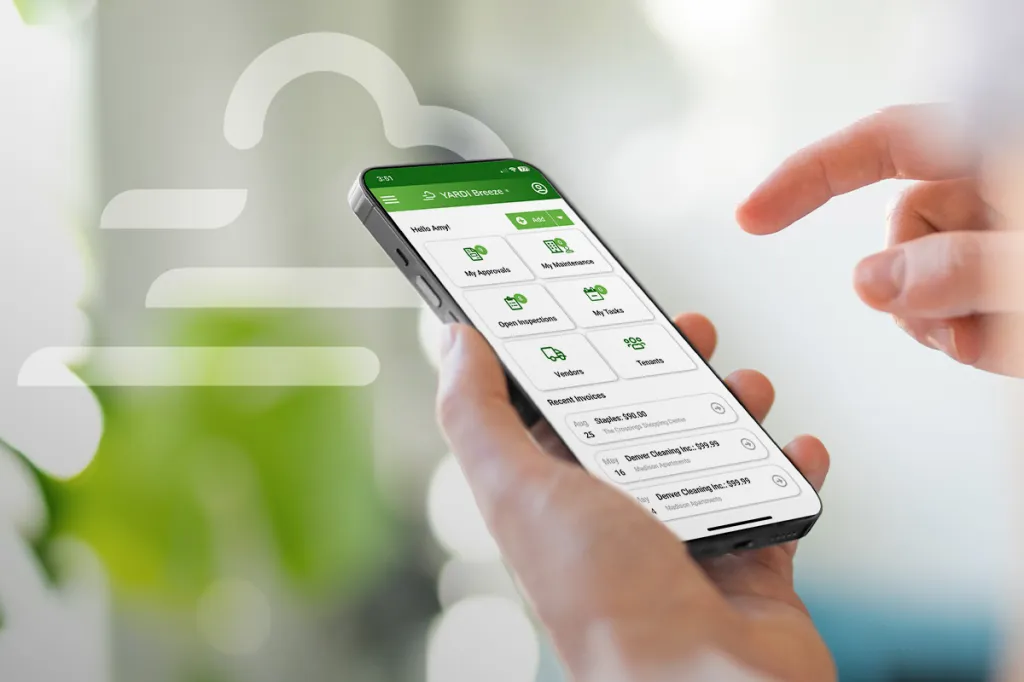
| Software | Yardi Breeze (all the essentials) | Yardi Breeze or Yardi Breeze Premier (upgraded capabilities) | Yardi Breeze Premier |
These are general approximations. Portfolio complexity, property type and team structure all affect when the right tools and hires make sense for your business.
Prepare your property management business for more volume
Despite the title of this article, growth is less about unit count and more about whether your setup can absorb more volume without requiring more personal time for every new door added.
A few questions worth answering before you take on more tech or grow your team.
- Do bottlenecks occur because processes need to go through you?
- Can you quickly pull reports to get important numbers?
- Are your workflows documented?
These questions are indicative of processes to fix before you scale, and they’re all fixable with the right software.
Make payroll the last thing you expand
Conventional wisdom is a ratio of one property manager per 100 residential units. However, this is an outdated way to think about your business. In practice, the right ratio depends on your property types, lease complexity and how much your software is carrying.
Before hiring new staff, work on upgrading your tech and refining your workflows. Then, once your team is consistently at capacity on work that isn’t meant for software (resident relations, owner conversations, vendor negotiations, etc.), it’s time to add headcount.
Greg Condon, president of Rimrock Property Management, manages 140 residential units alongside a substantial commercial portfolio. He does it all with a lean administrative team that has stayed lean even as the business doubled.
“We were able to double our portfolio size even while limiting our number of administrators.”
Greg Condon, President, Rimrock Property Management
Keeping headcount flat while volume grows means identifying routine tasks that should be handled by the system. Jason Korb, owner of Capstone Communities, a 200-door affordable and market-rate portfolio, did just that. It saved his team up to 80 hours per month.
“We’re probably saving 15 to 20 hours a week with Breeze Premier. That’s a lot for a small company, and it means we’re able to do more deals on the development side.”
Jason Korb, Principal, Capstone Communities LLC
Grow through automation
At 50 units, spreadsheets might be able to hold things together.Past 100 units, this is not a recipe for success. The key to growth is that the transition point shouldn’t occur when you’re already struggling.
“In the system my broker was using before I joined, everything was manual: charging fees, rent and even late fees. I said, ‘We need to get some automation because if we grow by 100 doors next year, we aren’t going to survive doing everything manually.’”
Yarmmys Vargas, Property Manager, Zen Living Management
Manual processes add time and error at every step. What’s a minor friction point at 50 units becomes a problem at 150. Once the problem is resolved, you’re looking at a better-run business even if you don’t expand.
Real examples: How property management software can change your business
Electronic rent collection & late fees
Resident portals can eliminate the need for trips to the bank, manual posting and chasing down checks. Rob Chiang, CEO of RC Real Estate Services, manages 400 residential units with a small team. He credits online rent collection with saving him 24 hours of work each month and turning his operation completely paperless.
Automated accounts payable
At Capstone Communities, Jason Korb eliminated $250-$500 per month in wire transfer fees by running vendor payments through Yardi Breeze Premier. He also reduced the manual review burden that came with processing them by hand.
Owner reporting in one click, not one afternoon
Stacia Phifer, business manager at Catalyst in Charlotte, says monthly reports that once required significant manual effort now come together in a few clicks. Owners expect it, she saves time and Breeze Premier makes everything nearly effortless.
Fully digitized maintenance workflow
Before Mandie Yannitti‘s team at Woodard Development took over their 50-unit residential portfolio, tenants were dealing directly with a private landlord. There was no real system in place. Now, as Mandie describes it, “They can pay rent online, submit maintenance requests digitally and communicate without needing to track someone down in person.” Work orders move through the system automatically. No one has to craft individual texts or emails to keep the process moving forward.
Prospect-to-renter leasing in one system
In Breeze and Breeze Premier, prospects apply online, get screened, sign digitally and move in without your team handling paper. Rob Chiang’s team describes this as an essential feature. Every step of the leasing process goes through the portal, from first contact to move-out.
Yardi Breeze vs. Yardi Breeze Premier: When to make the switch
Breeze is built for operators who are growing. Breeze Premier picks up where that leaves off. In addition to everything Breeze offers, Breeze Premier includes:
- Advanced reporting
- User roles and permissions
- Two-way texting
- Smart AP, an AI-powered solution
- Job costing
Of the features named above, the upgrade usually makes sense when at least one of two things happens. One, your reporting needs surpass what standard reports can deliver. Two, your team gets large enough that controlling access and assigning roles starts to matter. Stacia Phifer mentions the latter as a good reason to upgrade.
“I appreciate being able to dive deeper into permissions and user roles. The biggest benefits I’ve received from upgrading to Breeze Premier are the increased efficiency and protection.”
Stacia Phifer, Business Manager, Catalyst
These controls keep mistakes from spreading across your whole portfolio while you scale. They also make it possible to delegate without losing oversight.
KPIs: What software helps measure when scaling up from 50 to 200 units
Occupancy rate & days vacant
This is your baseline. Know it at the property level and the portfolio level. A soft number at one property can mask strong performance elsewhere — or flag a leasing problem before it compounds. Property management software simplifies tracking and reporting for a single property and across your portfolio.
Rent collection rate
What percentage of rent due was collected by the end of the month? When your portfolio scales from 50 to 200 units, even a modest drop in that rate has real revenue impact. Automation and the resident portal can help protect this number.
Maintenance response & completion time
Do you track how long it takes to go from work order submission to resolution? This one matters for resident satisfaction and for flagging when your maintenance team is stretched thin.
Owner satisfaction & retention
Owners who get consistent, accurate, timely reporting tend to stay. Nicholas Dunlap, founder and CEO of Spadra Property Company, connects the reporting question directly to outcomes.
“Having access to current rent rolls and operating statements — updated today, not weeks or months ago — helps drive informed decision-making, which ultimately leads to better outcomes.”
Nicholas Dunlap, Founder & CEO, Spadra Property Company
What property management software can automate
| Task | Software capability | Still needs a person? |
| Rent collection & posting | Fully automated via resident portal | No |
| Late fee application | Automated by date rules | No |
| Vendor payments (AP) | Add Yardi Bill Pay or Yardi PayScan | Approval step only |
| Owner reporting | One-click monthly packets | Review & send |
| Maintenance work order routing | Digital submission & tracking | Diagnosis & vendor selection |
| Listing syndication | RentCafe posts to ILS automatically | No |
| Lease renewals & rent increases | Automated notices & signing | Decision on terms |
| Resident screening | Integrated application & screening | Final approval |
| Vendor insurance tracking | Automated expiration alerts | Vendor follow-up |
| Prospect follow-up (CRM) | CRM queue & reminders | Relationship building & conversations |
| Property marketing website | Listing & syndication via RentCafe; custom marketing sites | Content & brand decisions |
| Invoice processing (Smart AP) | AI reads emailed invoices and routes them to approval | Review & approval |
| Prospect & resident chat (Chat IQ) | 24/7 bot across chat, text, email and voice | Complex or escalated conversations |
The bottom line
Scaling a rental portfolio from 50 to 200 units comes down to infrastructure. The operators who get there without breaking things tend to automate the repeatable work early, pick software that has room to grow and track the numbers that actually tell them something. Operators who come out ahead build the systems first and grow into them.
“Being face-to-face with tenants all day won’t grow your business. The only way that we know to achieve this is to implement proven systems like Breeze Premier.”
Rob Chiang, CEO, RC Real Estate Services Inc.
Every portfolio is different, but the industry works the same for everyone. Adapt crucial systems before you actually need them, and growth gets a lot less complicated.