Cybersecurity is not just a concern for big corporations with robust IT departments. Property management businesses of every size collect exactly what attackers want: resident names, Social Security numbers, bank account details and rent payment records. In most cases, all this sensitive data is stored in one database. That makes even a small operation a potential target for criminal activity.
The good news is that most cybersecurity protection comes down to a handful of habits, not a large security budget. Here are five practical ways to keep your business and your residents safer online.
1. Learn to recognize phishing attempts
Phishing is still the most common way attackers get in. In the FBI’s 2025 Internet Crime Report, phishing and spoofing were the single most reported type of cybercrime.
A phishing message pretends to come from a company or person you trust. It asks you to click a link, open an attachment or hand over a password. The message often looks legitimate, so the best defense is a slower one. Check the sender’s full email address, hover over links before clicking and confirm any urgent money or password request through a channel you already trust.
Train everyone on your team to do the same. One person clicking one bad link can expose the whole business.
2. Train your entire organization on cybersecurity
Most breaches start with a person, not a machine. A staff member reuses a password, clicks a link or sends a file to the wrong address. That means your team is your first line of defense, and they can only defend what they understand.
You don’t need formal training sessions. A short reminder at a team meeting, a quick reference guide by the desk or a note when a new scam is going around all help. When people know why a step matters, they are more likely to follow it.
3. Limit user access to sensitive data
Not everyone on your team needs access to everything. A leasing agent doesn’t need to see banking details, and a maintenance tech doesn’t need resident payment records. Giving each person access to only what their job requires limits the damage if any one account is compromised.
You can set role-based permissions in your property management software, so each user sees only the records and functions tied to their role. It keeps sensitive resident data out of reach of anyone who doesn’t need it, without slowing anyone down.
4. Remove employee access during offboarding
When an employee leaves, their access should leave with them. An active login for a former staff member is an open door, whether the departure was friendly or not.
Build offboarding into your routine. On someone’s last day, disable their accounts, change any shared passwords they knew and revoke their access to your property management system. In software with user-level controls, you can deactivate a single user in a few clicks and keep the rest of the team running.
5. Use strong passwords and a second layer of protection
Weak or reused passwords are one of the easiest ways attackers get into business accounts. Current guidance from the Cybersecurity and Infrastructure Security Agency (CISA) has moved away from the old advice to change passwords every few months. Frequent forced changes tend to push people toward weaker, repeated passwords, which is the opposite of what you want.
Three habits do more to protect your accounts:
- Make passwords long and unique. CISA recommends at least 16 characters, and a passphrase of unrelated words is both easier to remember and harder to crack than a short password full of symbols. Use a different password for every account.
- Use a password manager. It generates and stores long, random passwords so no one on your team has to remember them or write them down.
- Turn on multi-factor authentication (MFA). MFA asks for a second form of proof, like a code from an app, so a stolen password alone isn’t enough to gain access.
How often should you change your passwords?
Change a password when there’s a reason to, such as a suspected breach, rather than on a set schedule. A long, unique password paired with MFA protects an account better than a password you reset every few months.
Choose software you can trust with your data
The system that holds your resident data should take security as seriously as you do. That means data stored in the cloud with the provider handling backups, updates and infrastructure protection, so you’re not maintaining servers yourself.
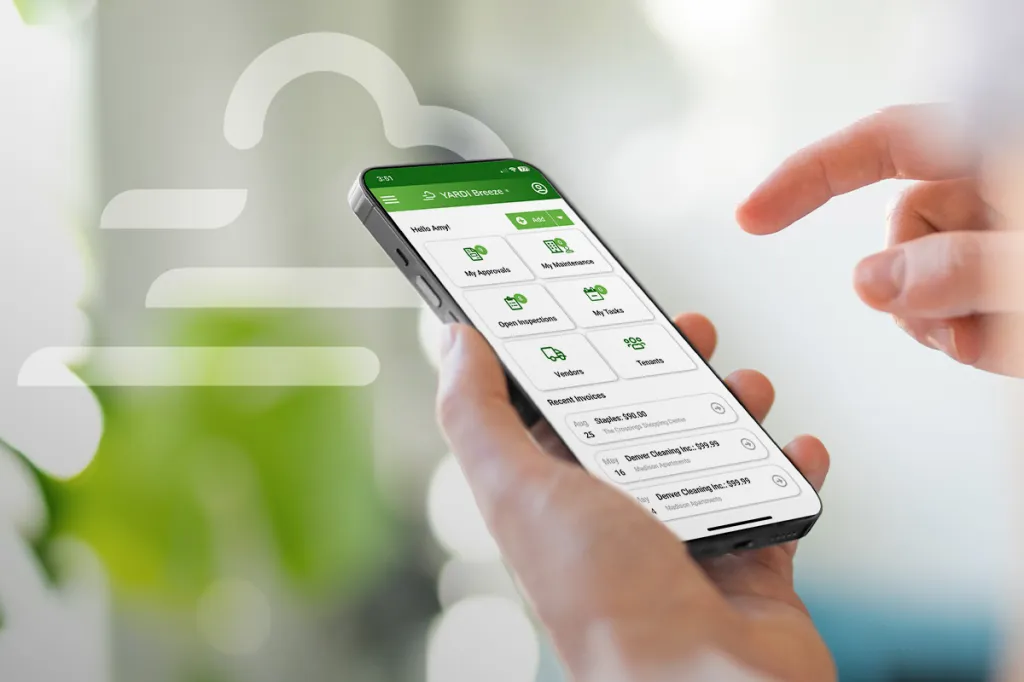
Yardi has been a member of the Forbes Cloud 100 since the list began in 2016, recognized nine consecutive years through 2024. Cloud services and data protection are a core part of how Yardi Breeze is built.
Now is the time to act
Good security habits go further when your software supports them. If you’ve been putting this off for a few years, it’s time to evaluate your systems and processes around data protection, role-based user permissions and secure resident records.
FAQs
Change a password only when there’s a reason to, such as a suspected breach, rather than on a fixed schedule. Use long, unique passwords paired with multi-factor authentication (MFA). Frequent, forced resets tend to push people toward weaker, repeated passwords.
Phishing remains the most commonly reported form of cybercrime, and because resident data is often stored in one database, even a small, independent operation can be a worthwhile target for attackers.
Yes. Limit each team member’s access to the records and functions required by their role. For example, a leasing agent doesn’t need to see sensitive banking details. The right restrictions can reduce the damage if any single account is compromised. Role-based permissions can be set up and managed by an admin account in property management software like Yardi Breeze. (Breeze Premier upgrade required.)